

How to Measure Intranet Adoption Effectively


Most organizations have a general sense of whether their intranet is working, but very few have the data to prove it.
Low engagement, outdated content, and inconsistent usage are often easy to spot at a glance. What’s harder to understand is why those issues are happening, and where to focus efforts to improve them. Without that clarity, even well-intentioned updates can fall short.
This is where measuring intranet adoption becomes essential.
Adoption isn’t just about how often employees log in. It’s about how they interact with content, how easily they find information, and whether the intranet actually supports how they work day to day. When those elements aren’t aligned, it can lead to the kind of disengagement often described as intranet fatigue.
In this article, we’ll break down how to measure intranet adoption in a meaningful way, along with how to turn that data into practical improvements that drive better engagement and long-term value.
Why Measuring Intranet Adoption Matters
Intranet challenges don’t always present themselves clearly.
On the surface, everything may appear to be functioning. Content is being published, tools are accessible, and employees technically have everything they need. But beneath that, there are often signs that the intranet isn’t delivering real value.
These issues tend to show up in a few consistent ways:
Employees bypass the intranet entirely
Important information goes unnoticed
Communication becomes fragmented across channels
Teams rely on workarounds instead of core systems
Without data, these patterns are easy to overlook, which is why many organizations end up making decisions based on assumptions rather than actual behavior.
Measuring adoption brings clarity. It helps organizations understand how the intranet is being used, where friction exists, and most importantly, what changes will have the greatest impact.
What Does “Intranet Adoption” Actually Mean?
Adoption is often mistaken for usage, but the two are not the same.
An employee logging into the intranet doesn’t necessarily mean they’re finding value in it. True adoption reflects whether the intranet has become a reliable and useful part of the workday.
This typically shows up in three ways:

Consistency, where employees return to the platform regularly;
Engagement, when they actively interact with content and tools; and
Effectiveness, meaning they can quickly find information and complete tasks.
When these elements are present, the intranet shifts from being a passive resource to an active part of how work gets done.
Key Metrics to Track
Measuring intranet adoption effectively requires looking at a combination of signals rather than relying on a single data point. The goal is to build a clear picture of how employees interact with the platform over time.
Usage metrics provide a starting point. They show how many people are accessing the intranet and how frequently they return. While this is useful, though, it only tells part of the story.
Engagement metrics add another layer of insight. These include things like how long users spend on pages, what they click on, and how they interact with content. Patterns here can reveal whether the intranet is actually holding attention or is quickly being abandoned.
Content performance is equally important. Some pages may receive consistent traffic, while others go largely unnoticed. Understanding what content is being used versus what isn’t can help identify gaps and redundancies. It also presents opportunities to improve relevance.
Search behavior is often one of the most revealing indicators. When employees repeatedly search for the same information, or when searches return no results, it’s a clear signal that something is missing or difficult to find.
Together, these metrics create a more complete view of adoption, moving beyond surface-level activity to real insight.
What Most Organizations Get Wrong
Even when organizations are tracking data, they don’t always use it effectively.
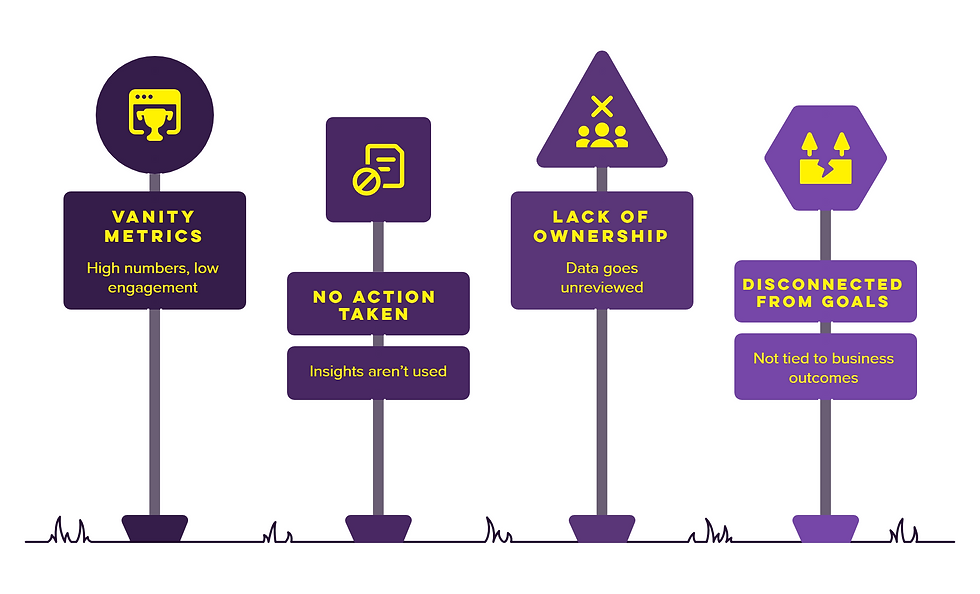
Some of the most common pitfalls include:
Focusing on vanity metrics
High login numbers may look positive, but they don’t reflect meaningful engagement
Collecting data without acting on it
Insights lose value if they aren’t used to guide improvements
Lack of ownership
Without clear responsibility, data often goes unreviewed or deprioritized
Disconnect from business goals
Metrics should tie back to productivity, communication, and efficiency—not just activity
Recognizing these gaps is the first step toward using data more effectively.
Turning Data Into Action
Collecting all of this data is valuable—but on its own, data doesn’t improve adoption. What matters is how it’s used.
Instead of focusing on individual numbers, it’s more effective to look for patterns in behavior. For example: are employees consistently searching for the same information? Are certain areas of the intranet being ignored? Are some teams more engaged than others?
Patterns like these can point to underlying issues that need to be addressed.
From there, organizations can begin to take targeted action. This might include updating or reorganizing content, improving navigation, or simplifying access to commonly used resources. Small changes, when guided by real data, often lead to meaningful improvements as the intranet evolves.
Ultimately, adoption improves when your intranet evolves based on how the employees using it work, rather than how it was originally structured.
How Modern Intranet Tools Support Better Insights
With all of this being said, measuring adoption effectively often requires more than just standard platform analytics.
Modern intranet solutions provide deeper visibility into how employees interact with content and tools. They make it easier to:
Track engagement trends over time
Understand how different teams use the intranet
Identify gaps in content and structure
Deliver more targeted, relevant experiences
Platforms like Powell build on Microsoft 365 by bringing these capabilities together, helping organizations move beyond basic metrics and develop a more complete understanding of intranet performance.
Take the Next Step Toward Better Intranet Adoption
Understanding how your intranet is being used is the first step toward improving it—but turning that insight into meaningful change requires a clear adoption strategy.
In many cases, even when data is available, it can still be difficult to determine what actions will have the greatest impact. Low engagement, unclear metrics, or conflicting signals often point to deeper gaps across content, user experience, tools, and governance.
This is where a more structured approach makes a difference.
At Synergy, we work with organizations to evaluate their digital workplace environments holistically—connecting the dots between how the intranet is designed, how it’s used, and where it’s falling short. The goal isn’t just to surface data, but to translate it into clear, actionable improvements that drive adoption and long-term value.
If you’re not sure where to focus, a structured evaluation can help identify the gaps that are limiting your intranet’s effectiveness and outline a path forward.


Comments